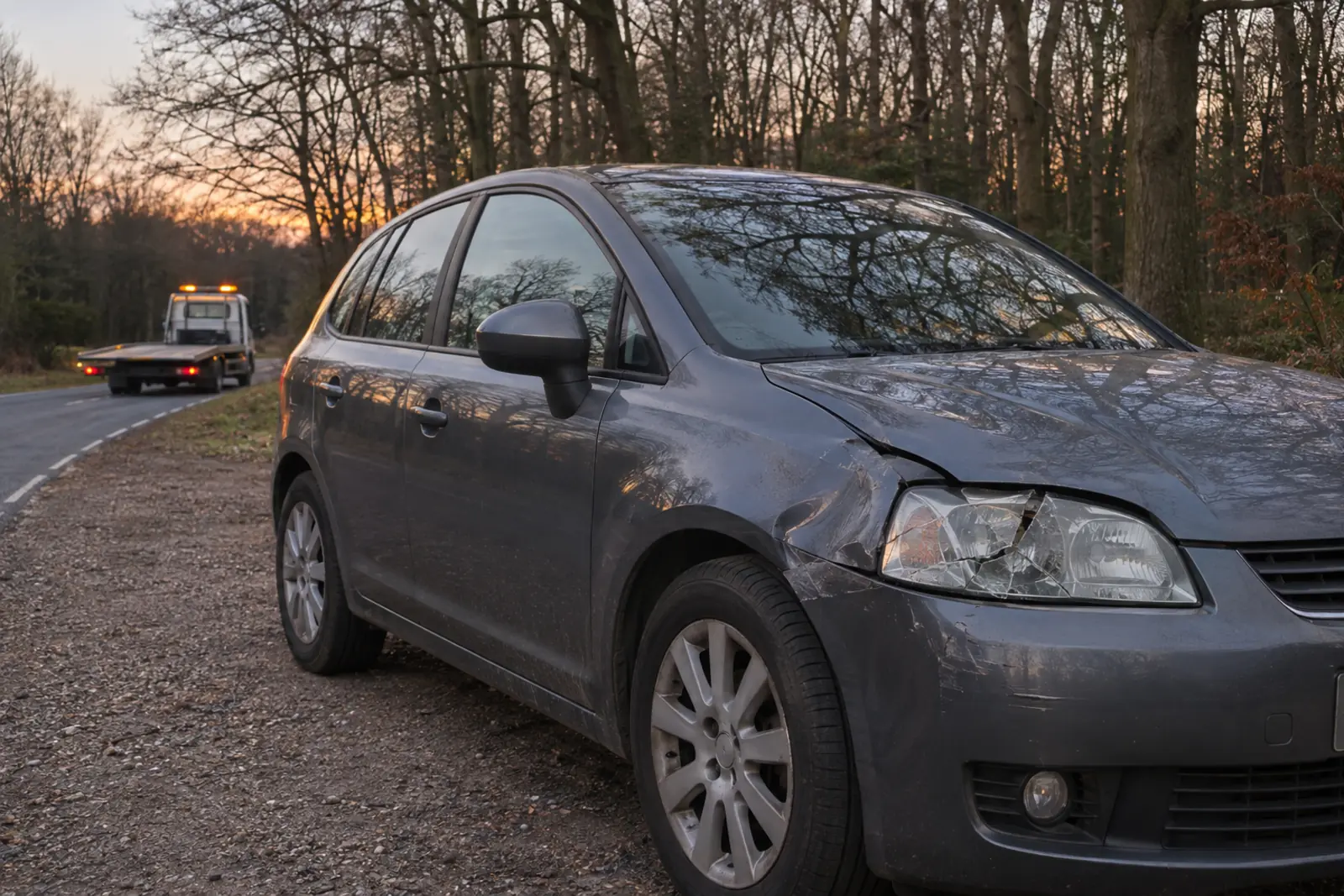
If you hit a deer near Leicester, get the car out of the travel lane if it still moves, turn on the hazard lights, stay away from the animal and call 911 if anyone is hurt or the car is blocking traffic. Then photograph the damage and call your insurer: damage from hitting a deer is generally a comprehensive claim. If the car cannot be driven safely, you will need a tow, and you will probably want an officer's report. This guide covers the sequence in order, from the shoulder to the repair shop.
Why the mountains see so many of these
Deer collisions in North Carolina cluster in the fall. A state wildlife biologist quoted in news coverage puts the greatest risk at roughly mid-October to early December, and NCDOT crash data has shown November as the worst month. Deer are most active at dawn and dusk, but during the rut they move at any hour, and they often travel in groups, so one deer crossing usually means another is behind it. Curving two-lane roads with wooded edges, which describe much of western Buncombe County, leave drivers little time to react.
The first five minutes
- Do not swerve before impact. Wildlife officials advise braking firmly and staying in your lane, because a swerve toward oncoming traffic or a tree is usually worse than the deer.
- Move off the road if the car runs. Check that the car is steerable and that nothing is leaking or dragging, then pull onto the shoulder or a driveway. Hazard lights on.
- Check yourselves first. Airbag deployment, neck pain and dizziness are reasons to call 911, even if the car looks fine.
- Leave the animal alone. An injured deer can kick or bolt. If it is alive and in the road, report it to the dispatcher rather than approaching it.
- Take photos. Damage, the road, mile marker or nearest cross street, the time and the animal if it is safe to do so. Your insurer will ask. Get names and numbers from any witnesses.
- Do not stand in the lane. Watch traffic on dark roads, especially on bends. A second driver braking for the same deer is a real risk.
Hit a deer: who do I call?
Call in this order. 911 comes first if anyone is hurt, the car is blocking a lane or a live deer is in the road. A tow company or your roadside provider comes next if the car will not drive. Your insurance company comes last, ideally the same day, to open the claim. Insurers also advise calling the police because a report supports a damage or injury claim, and because the deer may endanger other drivers.
Outside city limits, the responding agency is usually the State Highway Patrol or the Buncombe County Sheriff's Office. If the situation is not an emergency, the non-emergency line works while you wait for a tow. Roadside coverage, which is described in the guide to roadside assistance services, may include towing after a collision, so check your card or app before paying a driver on the spot.
When the car cannot be driven
Warning signs that mean "do not drive on": coolant or fluid pooling under the car, a hood that will not latch, a radiator or cooling fan smashed so the engine will overheat, headlights or the windshield damaged enough to block your view, a bent wheel, or any warning light that stays on after the collision. Deer strikes often crack radiators, and a few miles of driving can turn a repairable car into an overheated engine.
In that case, the usual sequence is the one described in how a tow call works: call your roadside provider or insurer if you have coverage, or a local tow company, give an exact location and tell the dispatcher you hit an animal and what is damaged. If a deputy or trooper responded, the officer can also arrange a tow, which is a different situation with different rules; the guide to police reports and police-ordered tows explains how to tell them apart and what to ask for.
If the collision happens on a highway, the safest place to wait is different from a back road. What to do when stuck on I-26, I-40 or I-240 covers staying clear of fast traffic until help arrives, and the Blue Ridge Parkway breakdown guide explains who responds on the Parkway.
| Condition after the collision | Reasonable next step |
|---|---|
| Cosmetic damage only, car drives straight, no leaks | Drive carefully to a safe place and photograph the damage; arrange an estimate |
| Hood crumpled, steam or coolant smell | Shut off the engine and call for a tow |
| Wheel bent, steering pulls, tire flat | Tow, or a tire change if the damage is only the tire and the wheel is straight |
| Airbags deployed or anyone is hurt | Call 911, then let the responders direct the tow |
| Electric or hybrid car, any front-end damage | Call for a flatbed and tell the dispatcher it is electric |
For the electric and hybrid row, the guide to towing an electric or hybrid car explains why a flatbed is the safe default, and flatbed versus wheel-lift towing shows how the two truck types differ for a front-damaged car.
Reporting the collision
North Carolina requires drivers to notify law enforcement of a reportable crash, which includes any injury or total property damage of $1,000 or more. A deer strike with a smashed headlight and a bent hood can reach that amount quickly. Outside city limits, the response usually comes from the State Highway Patrol or the Buncombe County Sheriff's Office. Even when no one is required to report, a report number makes the insurance claim simpler, so many drivers call the non-emergency line while waiting for the tow.
What about the deer?
You cannot simply load a dead deer into your trunk. According to the N.C. Wildlife Resources Commission, a deer killed by a vehicle may be possessed and transported only with authorization from the officer who investigates the collision. The Commission's wildlife possession and salvage permit page describes the rules for deer, turkey, bear and elk. If you do not want the carcass, tell the dispatcher where it is. A deer in the road is a hazard, and the highway agency or officer decides how to remove it.
Is hitting a deer a comprehensive claim?
Yes, in most cases. Hitting an animal is generally handled under comprehensive coverage, not collision, since the damage did not come from striking another vehicle. Collision applies if you swerve and hit a guardrail, a tree or another car, or if the vehicle rolls over. According to Progressive's consumer guidance, comprehensive is optional unless you lease or finance the car, so a driver with liability-only coverage typically has no coverage for their own car.
You pay your comprehensive deductible and the insurer pays the rest of the covered repair. Progressive says deductibles typically run from $100 to $2,000, and that a totaled car is paid at actual cash value minus the deductible. Injuries are a separate matter: medical bills may fall under medical payments or personal injury protection coverage if your policy includes either.
Will a deer claim raise my insurance rates?
It depends on the state and the insurer. Many insurers treat a single comprehensive claim as a no-fault claim that does not raise rates the way an at-fault collision does. Progressive notes that even a not-at-fault claim is added to your claims history and that a rate increase is not ruled out. Ask your insurer before you file.
Filing the claim after a deer strike
- Gather the photos, the report number if there is one, the time and place, and the tow receipt.
- Report the claim to your insurer and say plainly that you hit a deer and that no other vehicle was involved.
- Ask whether towing and storage are covered under the claim, whether your roadside coverage kicks in first and whether you must use a particular repair shop.
- Get a repair estimate, and have a shop check the radiator, cooling fans, headlights, sensors and alignment, since damage can be hidden after a front-end strike.
- Ask for the deadline to file. It is set by your policy, so confirm it with your insurer rather than waiting.
The article on whether insurance pays for a tow lists where that coverage tends to hide, and the guide to towing costs in Buncombe County shows what the bill itself is made of, including mileage, after-hours charges and storage.
Choosing where the car goes
When a rural collision happens at night, it is easy to let whichever truck shows up take the car to its own lot. You have the right to ask where the car is going, what the daily storage fee will be and whether you can retrieve your belongings. If you have a preferred shop or your insurer has a network, say so before the truck leaves. For the questions worth asking, see how to pick a tow company and spot the red flags.
Cutting the odds next time
- Slow down at dusk and dawn from October through early December.
- Use high beams when no one is ahead of or approaching you.
- When one deer crosses, expect more.
- Do not count on deer whistles or roadside reflectors: wildlife officials say they have not been proven to prevent crashes.
- Keep a safe distance behind the car ahead, because it may brake hard for a deer you cannot see yet.
Frequently Asked Questions
Do I have to call the police if I hit a deer?
You must notify law enforcement of any reportable crash, meaning an injury or total property damage of $1,000 or more. If the damage is smaller and the car is safe to drive, a report is not required, but many drivers call anyway so there is a report number for the insurer and so the deer is dealt with.
Who do I call first when I hit a deer?
Call 911 first if anyone is hurt, the car blocks traffic or a live deer is in the road. If it is only vehicle damage, call a tow provider if the car cannot be driven, then your insurer to open a claim.
Will my insurance cover hitting a deer?
Typically only if you carry comprehensive coverage, which is optional in North Carolina unless a lender or lease requires it. Liability-only policies pay nothing toward your own car. Check your declarations page or ask your agent.
Is hitting a deer a collision or comprehensive claim?
Comprehensive, in most cases, because the damage came from an animal and not from another vehicle. If you swerve and hit a tree, guardrail or car, or the car rolls, the claim is usually treated as collision instead.
Can I keep the deer I hit?
Only with permission from the officer who investigates the collision. The Wildlife Resources Commission says a vehicle-killed deer may be possessed and transported only with that authorization.
Should I drive the car home after hitting a deer?
Only if it steers normally, nothing is leaking, the lights work and no warning lights are on. Radiator damage is common, and driving even a short distance on a leaking cooling system can wreck the engine, so when in doubt, call for a tow.
Does a deer collision raise my insurance rates?
Many insurers treat a single comprehensive claim as a no-fault claim that does not raise premiums the way an at-fault crash does, but practices vary and the claim still goes on your history. Ask your insurer before you file.